
Powered by RedCircle
How does adding one three-letter word transform defeat into possibility? In this inspiring final episode with Sheryl Tullis, host Tracy Crowley explores the profound impact of language, mindset, and purposeful action in creating meaningful change. What begins as a conversation about personal growth evolves into a powerful testament to how individual commitment can literally save lives.
Sheryl’s guiding philosophy centers on a simple but transformative question: “When is the last time you did something for the first time?” This isn’t just about adventure-seeking—it’s about maintaining a growth mindset that keeps us stretching beyond comfort zones and avoiding the stagnation that comes from routine. Whether it’s her husband learning woodworking techniques from YouTube or her own journey learning mountain biking in her mid-50s, Sheryl emphasizes the importance of continuous learning and self-reliance.
The conversation takes a fascinating turn when Tracy and Sheryl discuss the neurological power of the word “yet.” The difference between saying “I’m not good at that” versus “I’m not good at that yet” isn’t merely semantic—it’s transformational. As Sheryl explains, “Your brain will help you accomplish that thing, and your friends and your loved ones will help you accomplish that thing.” This simple linguistic shift activates neuroplasticity and signals to both ourselves and others that we’re in a learning process rather than accepting a fixed limitation.
Sheryl’s commitment to being a “multiplier”—someone who amplifies others’ capabilities and rides along on their journey of growth—extends far beyond personal development. When she met Matt Griffin, founder of Combat Flip Flops, through the West Point Service Academy directory, neither could have imagined the life-saving work they’d undertake together. Initially connected through business investment opportunities, their relationship deepened into something far more significant when the Taliban retook Afghanistan in August 2021.
Rather than accepting helplessness in the face of overwhelming tragedy, Sheryl joined a team dedicated to protecting Afghan allies who had supported American forces. The scope of their work was staggering—helping translators, teachers, university professors, diplomats, doctors, and the Afghan women’s cycling team escape Taliban persecution. The challenges were equally daunting: fundraising investigations, repeated Western Union shutdowns, losing track of people they were trying to help, and navigating complex international evacuation logistics.
“It was really a challenge,” Sheryl admits, but the team’s persistence has paid off. Just weeks before this recording, another family reached safety in Canada after two years of hiding. While Sheryl can’t quantify exactly how many people they’ve helped—”dozens,” she estimates—each success story reinforces her belief in the starfish parable: it may be impossible to save everyone, but it matters profoundly to each individual saved.
Tracy’s emotional response to learning about this work reveals another dimension of its impact. “Without them, I felt helpless,” she shares, describing how knowledge of Sheryl and Griffin’s efforts provided hope during the devastating period following America’s withdrawal from Afghanistan. “Knowing there was a community of people out there activated and actively working, and today, still, two years later, working to solve that problem” gave her something to hold onto during dark times.
This reaction illuminates how individual action creates ripples far beyond its immediate impact. Sheryl’s work didn’t just save specific families—it provided hope to countless others who felt powerless watching the crisis unfold. As she notes, “Not doing anything just worsens the helpless feeling. So if I can take some kind of action, no matter how small, it helps alleviate that.”
The episode concludes with a powerful discussion about hope itself. When Tracy recalls being told not to “get your hopes up too high,” she responds with characteristic directness: “What good are low hopes?” This philosophy aligns perfectly with Sheryl’s approach to life—that while “hope may not be a strategy, it’s a necessity.”
Sheryl’s story demonstrates how the growth mindset embodied in the word “yet” can scale from personal learning to global impact. Whether she’s learning mountain biking, helping others develop new skills, or coordinating international rescue operations, the same principles apply: continuous growth, purposeful action, and the belief that limitations are temporary states rather than permanent conditions.
About Sheryl Tullis
Sheryl Tullis is known for challenging boundaries.
She graduated from West Point in the first decade of women graduates. While a cadet, she qualified Airborne and interned as a speechwriter for General Colin Powell. Her first assignment as an Army officer was Deputy Director of Information Management in Germany, during the early days of the world wide web. A few years later Sheryl pioneered Procter & Gamble’s first e-commerce business. At Microsoft, Sheryl served as chief of staff and speechwriter for the Chief Marketing Officer, and created new digital marketing capabilities for 7700 marketers.
Excited by emerging tech, she leapt to exec positions on the mobile agency side — earning 11 industry awards in two years. An advocate for helping others smash ceilings and break boundaries, Sheryl founded Women in Wireless – Seattle and Mobile Mixers, and she earned the Mobile Growth Summit / Bolden “People’s Choice” award for her work as global president of the non-profit which champions women in digital.
Sheryl then joined a private equity firm and rose to Partner and Chief Marketing Officer. A strong proponent of military veteran hiring, she helped pioneer the Microsoft Software and Systems Academy, the first tech transition program for transitioning service members.
Last year she left the corporate world to co-found The Line Experience, with a goal of breaking down barriers to cycling and more inclusive access to public lands. The Line Experience provides affordable mountain, gravel, and e-bike rentals; instruction, and trail guidance, with a particular focus on newer riders of all ages and backgrounds.
- Website: https://thenextstage.co/ | https://theline.bike
- LinkedIn: https://linkedin.com/in/sheryl
- Instagram: https://instagram.com/thelinebike
About Tracy Crowley
Tracy Crowley has always been an entrepreneur. Whether it was making gowns for fellow Army wives, taking portraits in black and white, or working on her other businesses, she is always learning something new.
That passion for learning something new and giving something back collide nicely in this podcast.
Join Tracy for Good Life Stories, where simple curiosity brings out great stories, every single time.
Check out Tracy’s new book! https://tracycrowley.life/
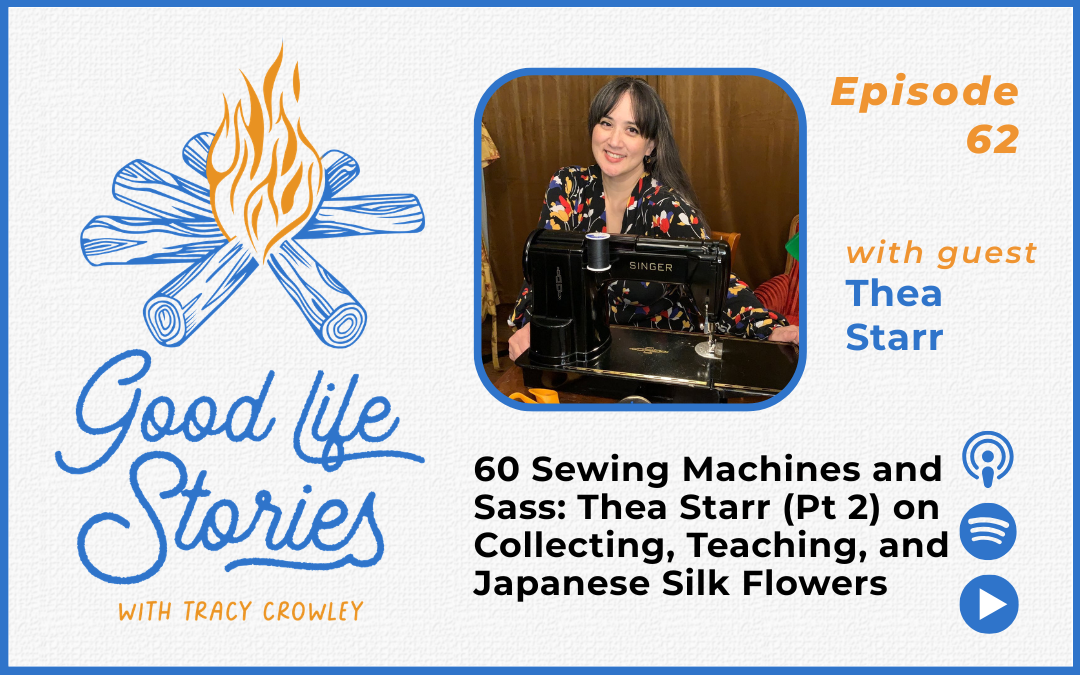
60 Sewing Machines and Sass: Thea Starr (Pt 2) on Collecting, Teaching, and Japanese Silk Flowers
"Every morning I wake up, I brush my teeth, and I sharpen my tongue." ~ Dorothy Parker Thea Starr's favorite Dorothy Parker quote perfectly captures her sass as the youngest of six children. "I'm not a quiet girl," she says. "Nothing's happening for me unless I say...
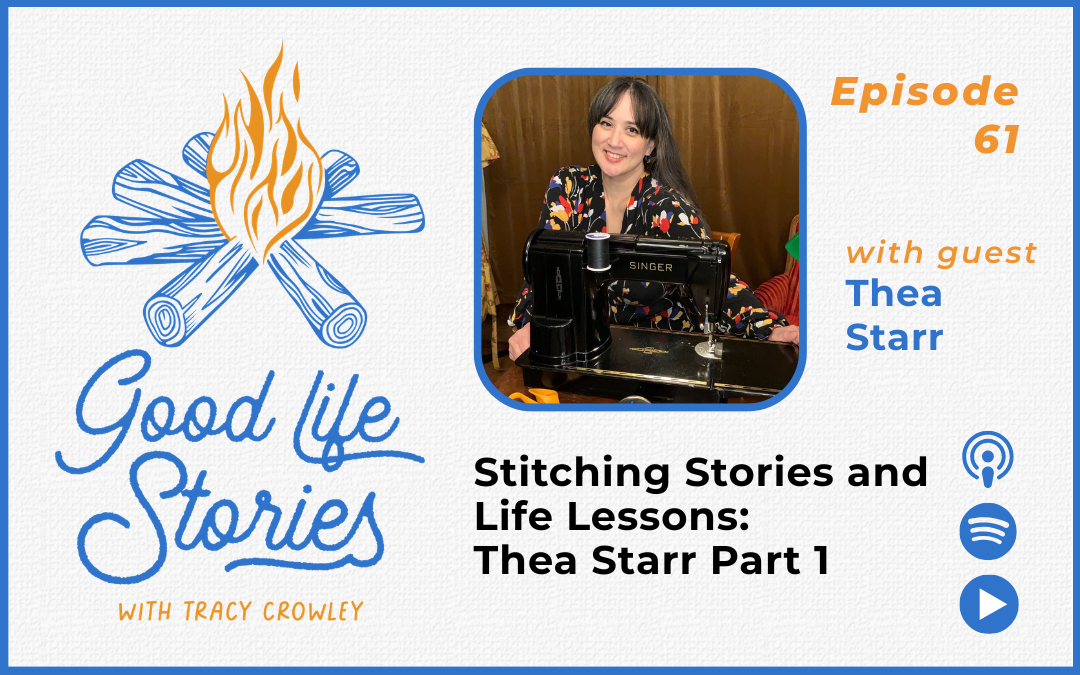
Stitching Stories and Life Lessons: Thea Starr Part 1
Thea Starr describes herself as "a lady in a workshop in the woods at the edge of a bog." She's a sewist, vintage sewing machine repairess, and designer. But before all that, she was "a wild girl. A teenage mom. I even went to juvenile detention. You know, bad girl....
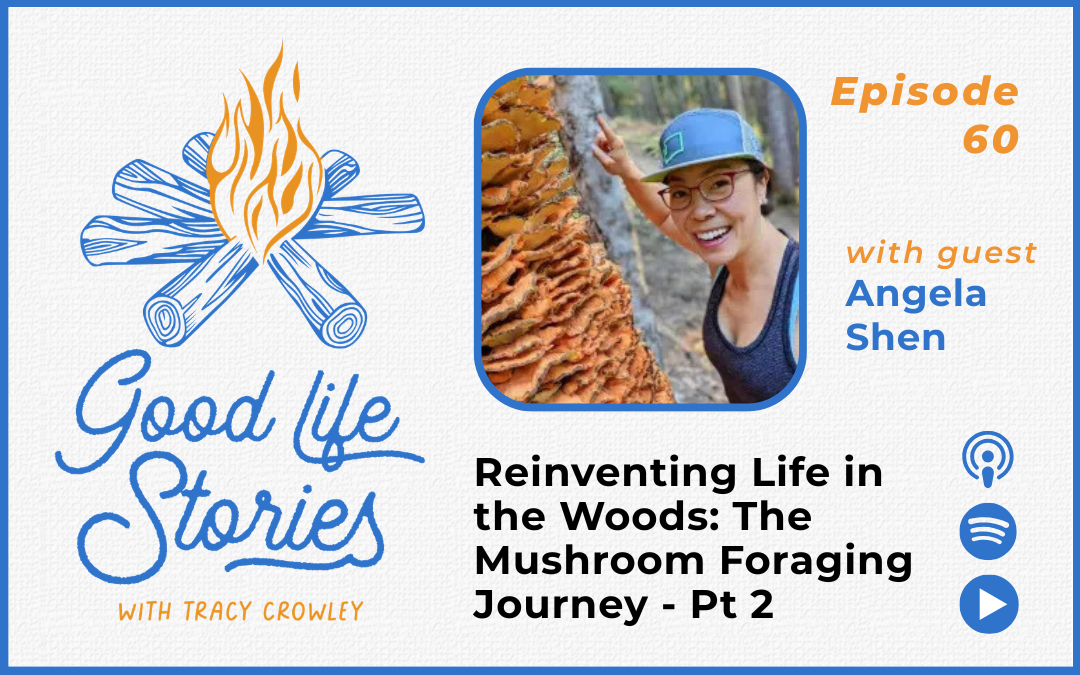
Reinventing Life in the Woods: The Mushroom Foraging Journey with Angela Shen Pt 2
Angela Shen had always been "one of those weird kids that actually liked eating mushrooms." Her dad's a chef, culinary mushrooms were a constant, but she'd never foraged for wild ones herself. Then COVID hit. Everyone was cooped up indoors. "The only access or freedom...

