
Powered by RedCircle
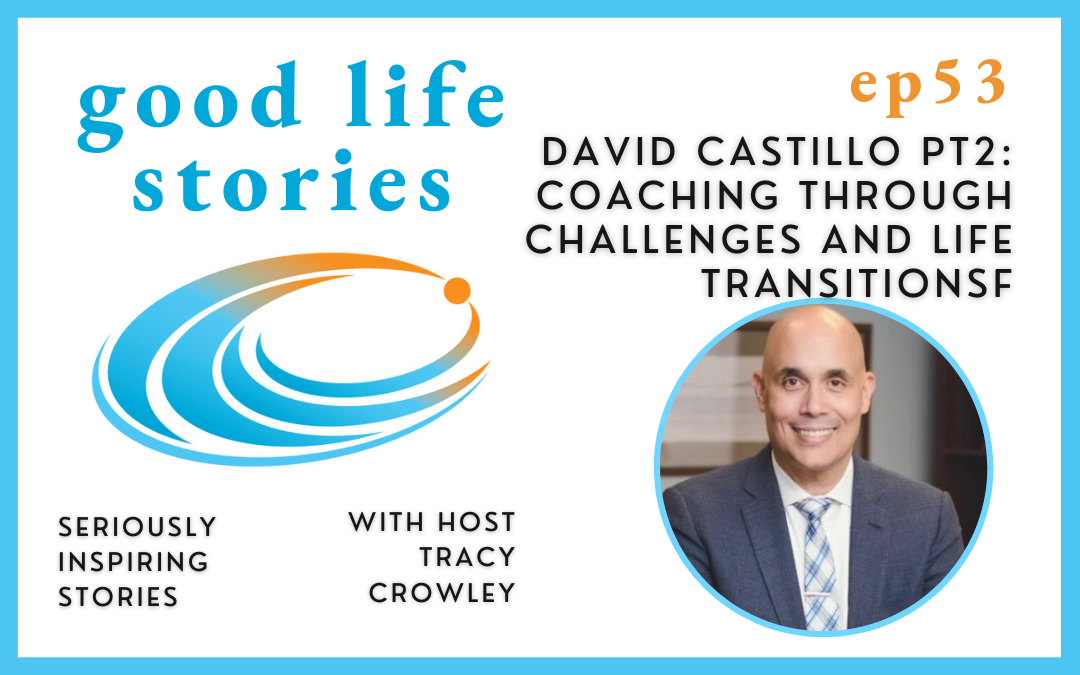
How do you know when a life season is ending and it’s time to embrace what comes next? David Castillo’s coaching story on Good Life Stories takes listeners through a 17-year journey that began with sending 14 letters asking to volunteer coach for free and may be approaching its natural conclusion as he contemplates his future in high school football.
David’s entry into coaching was deeply personal, rooted in gratitude for the coaches who had impacted him during his fatherless childhood. After his own football dreams ended with a senior year knee injury that stopped college recruitment cold, he found purpose in giving back. “That was one of the reasons that really drew me to coaching is just the opportunity to kind of pour into these young men and hopefully have an impact the way that my coaches did on me,” he explains.
His coaching journey began humbly when he returned to Washington State from the D.C. area. Of the 14 letters he sent to local coaches offering to volunteer, only one responded. Starting as unpaid help handing out equipment and keeping score books, David gradually earned more responsibility through persistence and dedication. His willingness to do “grunt work” while proving himself eventually led to coaching freshman teams and position groups.
The early years weren’t without challenges. David candidly shares that his first stop involved “more negative than positive,” not from the kids but from adult politics and feeling taken for granted despite his contributions. This experience taught him the importance of being valued and led to his decision to move to a middle school head coaching position where his efforts would be appreciated.
It was at this second school that David found his coaching sweet spot. Over six transformative years, he developed relationships that continue today. Two players he first coached in seventh and eighth grade still call him “Pops” and reach out like sons checking in with their father. “I took them from seventh grade to their senior year, and then I actually was leaving that school after they graduated,” he recalls, describing the rare opportunity to shepherd young men through their entire secondary school journey.
These relationships exemplify David’s coaching philosophy—that the game serves as a vehicle for developing character and building lasting connections. Former players who’ve become electricians, general managers, and other professionals still text him randomly to share life updates, demonstrating the enduring impact of coaches who genuinely care about their players as people, not just athletes.
Currently in his fifth year as a head coach at a private school in King County, David faces new challenges that have him questioning his future in coaching. The COVID-19 pandemic severely disrupted his early tenure, with Washington’s restrictive approach to high school sports creating frustration as other states played full seasons while his team managed only three games in their truncated first season. “The disparity in how states handled it was so frustrating,” he reflects on his involvement in a west coast coaching consortium trying to advocate for student-athletes.
Beyond pandemic challenges, David grapples with external pressures that affect his emotional well-being and, consequently, his interactions with loved ones. “There’s just some external things that happen… that impact me on an emotional level, that affect my mood, affect how I interact with the people around me who I love,” he admits. This self-awareness has prompted deep reflection about whether continuing in his current role aligns with his priorities.
The timing question becomes more pressing as David navigates empty nest syndrome with his son now in college. The demands of Friday night games and Saturday commitments conflict with his desire to be available for family, including potential visits to see his college-bound son. His wife’s increased travel for work to “cool places” where he’d love to join her adds another layer to his consideration of life’s next chapter.
David’s superpower of empathy, while enabling deep connections with players and families, also creates emotional burdens. “I’ve always really just kind of been empathetic and really feel other people’s pain and joy… it can be a real heavy burden,” he explains. This sensitivity allows him to notice when someone is struggling behind a smile and ask meaningful questions that demonstrate genuine care.
As David contemplates his future, his story illustrates the complexity of knowing when to transition from one calling to another, the courage required to step away from something that’s been central to your identity, and the ongoing impact coaches have on young lives long after the final whistle blows.
About David Castillo
Growing up in a single parent home with four children, you learn a great deal about making things last and doing a lot with a little. I remember my mom doing the best she could to put food on the table and clothes on our backs, while simultaneously working a low paying job and going to school. Experiencing my mom’s determination and commitment to our family gave me a great appreciation for the value of saving, working hard and dedicating my efforts to something bigger than myself.
Today, as a financial advisor, I am able to put those values to work. I partner with my clients to help determine their needs, desires and goals. Together, we then work through an established process to help determine the most appropriate financial strategy to help achieve those goals.
One of the things I most enjoy about being a financial advisor is the opportunity I have, on a daily basis, to impact the lives of others in our community. When I’m not working at Edward Jones, I coach high school football. I coach because I love to teach, and it helps me hone the teaching skills I use every day with my clients. I am a veteran of the United States Navy and a member of both the VFW and American Legion.
My wife, Callie, and our son, Caidan, and I live in the Edmonds area. I care deeply about their future, and I want to ensure that we live the best possible life and are prepared to handle any challenges that the future might present. I bring that same level of commitment and preparation to my clients.
I attended the University of Washington and received a BA in political science, and I have a master’s degree in organizational leadership from Gonzaga University.
Links:
- Instagram – https://instragram.com/dbcastillo
- Twitter/X – https://x.com/davidbcastillo
About Tracy Crowley
Tracy Crowley has always been an entrepreneur. Whether it was making gowns for fellow Army wives, taking portraits in black and white, or working on her other businesses, she is always learning something new.
That passion for learning something new and giving something back collide nicely in this podcast.
Join Tracy for Good Life Stories, where simple curiosity brings out great stories, every single time.
Check out Tracy’s new book! https://tracycrowley.life/
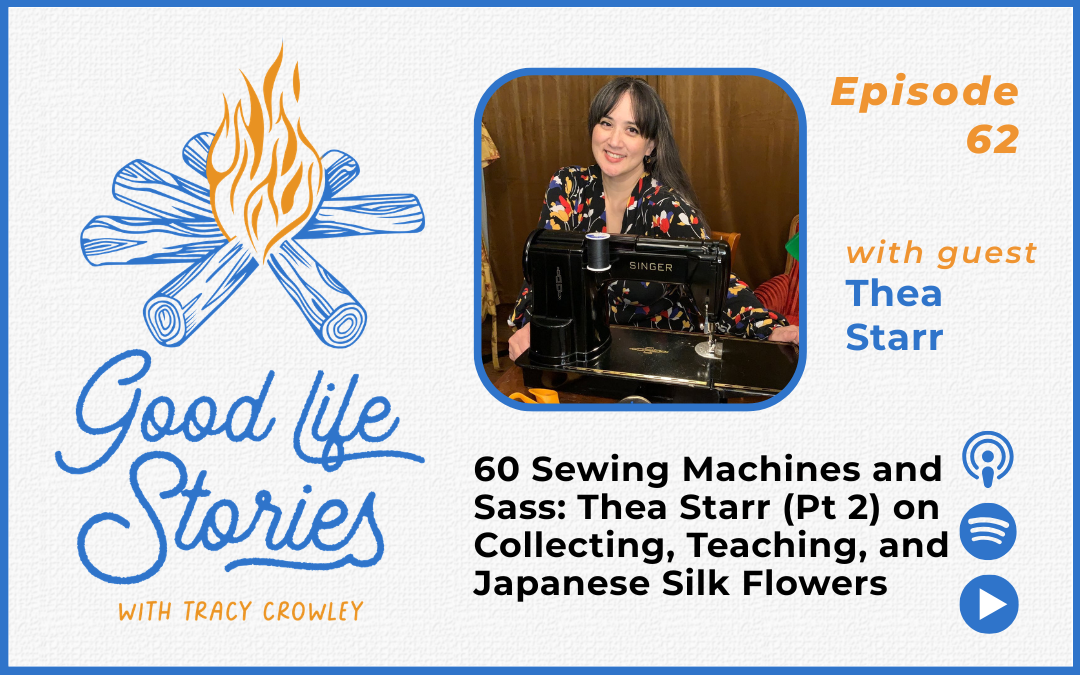
60 Sewing Machines and Sass: Thea Starr (Pt 2) on Collecting, Teaching, and Japanese Silk Flowers
"Every morning I wake up, I brush my teeth, and I sharpen my tongue." ~ Dorothy Parker Thea Starr's favorite Dorothy Parker quote perfectly captures her sass as the youngest of six children. "I'm not a quiet girl," she says. "Nothing's happening for me unless I say...
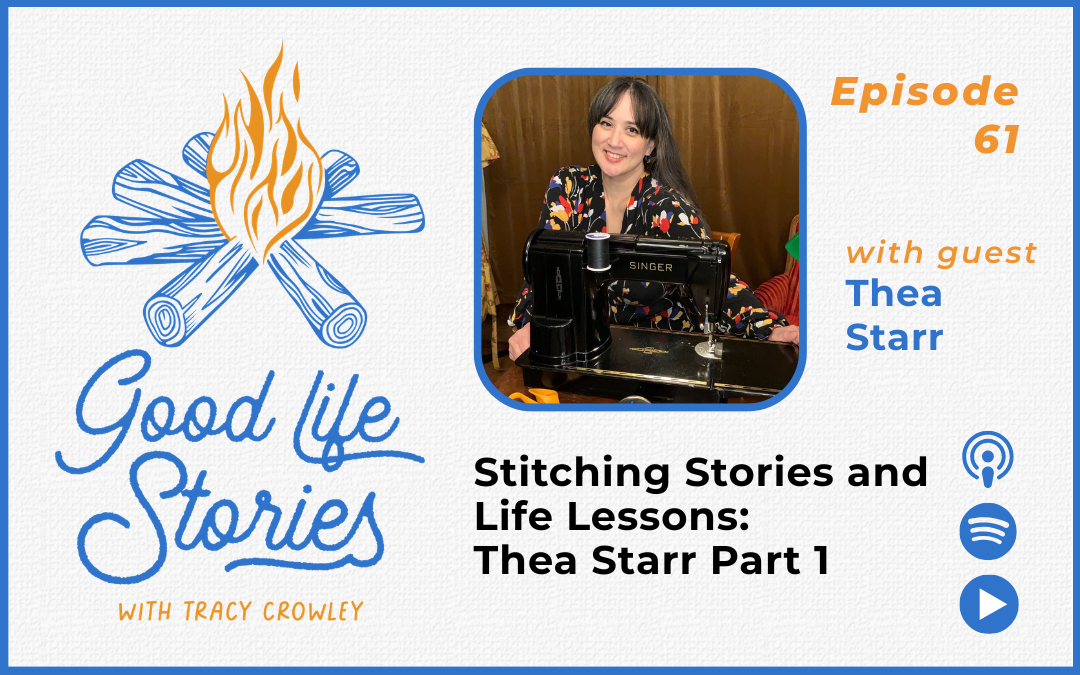
Stitching Stories and Life Lessons: Thea Starr Part 1
Thea Starr describes herself as "a lady in a workshop in the woods at the edge of a bog." She's a sewist, vintage sewing machine repairess, and designer. But before all that, she was "a wild girl. A teenage mom. I even went to juvenile detention. You know, bad girl....
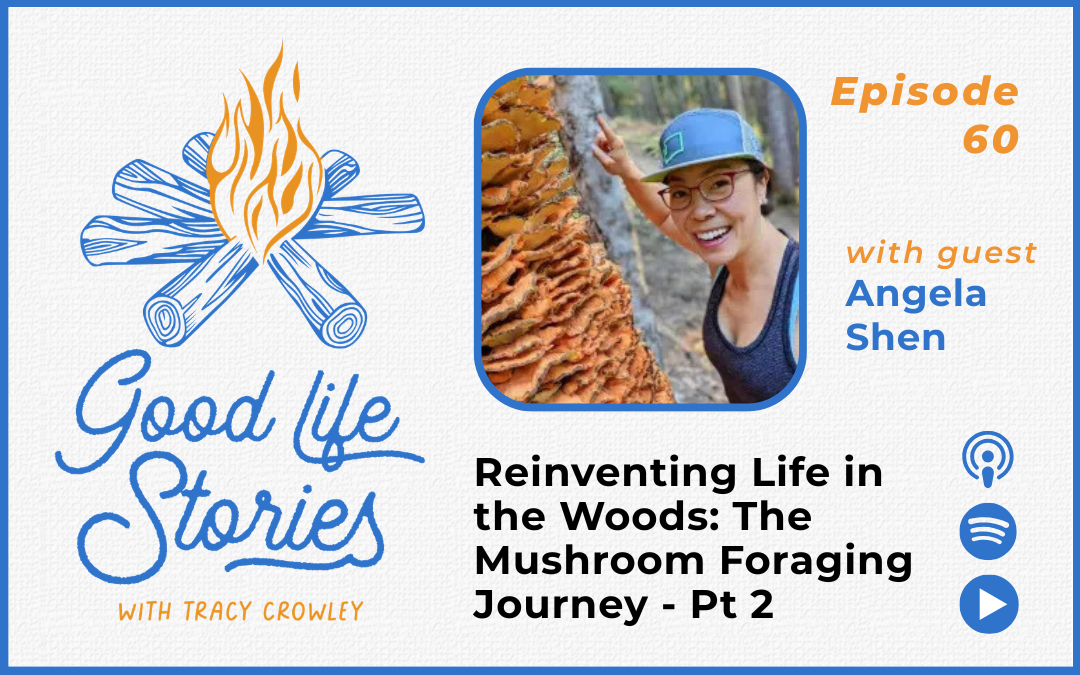
Reinventing Life in the Woods: The Mushroom Foraging Journey with Angela Shen Pt 2
Angela Shen had always been "one of those weird kids that actually liked eating mushrooms." Her dad's a chef, culinary mushrooms were a constant, but she'd never foraged for wild ones herself. Then COVID hit. Everyone was cooped up indoors. "The only access or freedom...

